02 · Rail
TrainCommerce. The right stock on every train.
Fewer sell-outs, more sales per train and less food going back to the depot. TrainCommerce records every sale by item, time and section of the line, and proposes the load and the rounds.
Train 06:10 · A–E
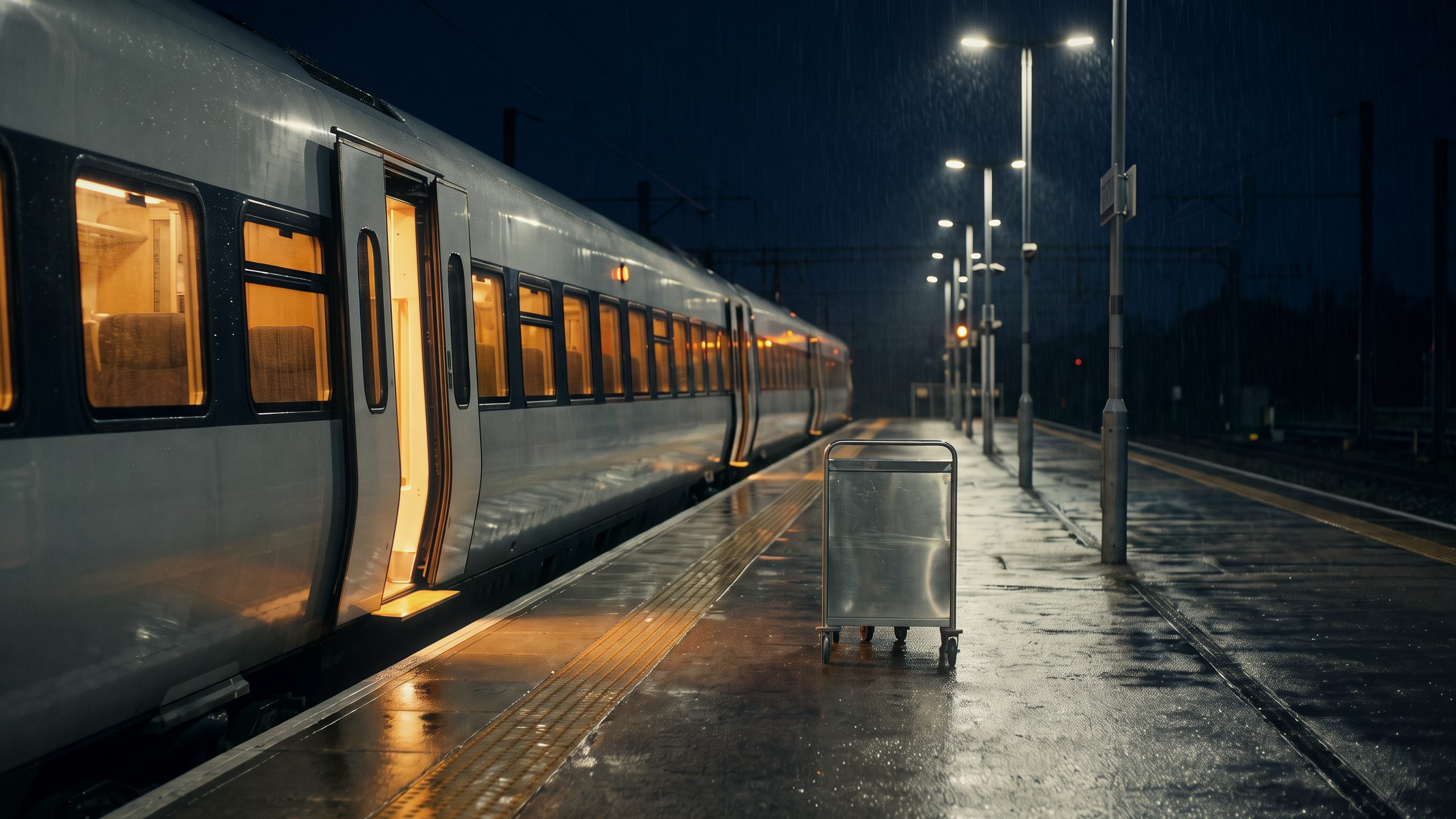
Packed once at the depot
Many trains leave with one mix that has to last from the first stop to the last.

Where the train is busy, the trolley runs empty early. The return list shows what came back in the evening, but nobody writes down where the coffee ran out.
Industry data: During festivals and sports events, demand on some sections can reach four to five times the usual level, according to a modelling study (CFMS, 2026).1
What you gain
Fewer sell-outs on the way
TrainCommerce forecasts the coffee, water and sandwiches a section will need.
More sales per train
Busy sections are marked on your roster, so rounds hit the peak.
Fewer returns, less waste
A train only carries what its own sections usually sell.
Which trains pay their way
Takings by train show which services sell well and which barely do.
Industry data: A projection found that stocking to meet 95% of forecast demand would mean more than 70% fewer sell-outs (Smith Institute, 2024).2
What the software shows
Illustration with made-up figures. A line from stop A to stop E in four sections, loaded once at A. Today the coffee runs out before D, and in the proposal it lasts to E. Croissants are left over at E and go back to the depot, so the proposal loads fewer. Still water and sandwiches stay as they are, and the first trolley round moves forward to B–C. On an event day, demand on section C–D rises.
- Train 06:10, Coffee sold out from D, Load more
- Train 06:10, Croissants back to depot, Load less
- B–C, First round comes after the peak, Bring round forward to B–C
- C–D, Busier on event days, Marked on roster
- Before
- Proposal
- Demand per section
- Stock on the trolley
- Round
- No sell-out
- Smaller return
- sell-outs per train ↓
- returns to depot ↓
The trolley is loaded once at A and empties as the train goes. With the proposal, the coffee lasts to E and fewer croissants travel back to the depot.
One decision · TrainCommerce · The weekday 06:10
- 04:30
Depot A · Onboard services leadProposed
TrainCommerce proposes more coffee, fewer croissants and an earlier first round at B–C. On the last eight weekday services the coffee was gone before D.
- 04:45
Approved 04:45
The onboard services lead approves it. Sandwiches and still water stay as they were.
- 05:30
Done
The trolleys are packed as proposed, and the first round sets off at B–C.
Decision: Train 06:10 · Section B–C · First round forward · Approved 04:45
Other industries
Sources (2)
- 1CFMS, impact study “Forecasting Catering Requirements for Improved Passenger Experience”, 13 July 2026. A model for a UK rail catering team, mostly in first class; demand here is the share of passengers who buy from a food category. cfms.org.uk
- 2Smith Institute, case study “Using machine learning to predict catering demand”, 12 April 2024. A projection from a back-test on past data from a public transport operator with mobile catering. www.smithinst.co.uk